Saturday, May 24, 2008

Friday, May 23, 2008
Data centers and airports
How would you create an effective network from scratch? Sure, you could experiment and then evolve over time. But what if you had to build a good network right now and couldn't experiment?
One idea came to my mind on my bike on the way to work: could you copy the size and location of airports for the efficient placement of distributed data centers? This might be a good predictor for suitable places. Why? One assumption is that airports are located at places where there is a need, either direct need or indirect need as a hub. One can also argue that over time more effective and better located airports grew whereas airports at unpopulated areas decreased in size and vanished. Finally, the cost structure is similar: high fixed costs and little variable costs.
Here are two examples: my previous hometown Charlottesville has only about 40.000 inhabitants and has a small airport. Considering the fixed costs of an airport (btw, you can compare those costs to a data center) one would only invest if there's enough return, i.e. traffic. Smaller town won't probably have an airport or only for recreational purposes. Of course large cities such as San Francisco have large airports to serve the local population. Now let's look at hubs. For hubs the economics are similar and to a part totally different from regular airports. Hubs channel traffic and require a larger size. Hence, location between centers and size are important. It is no surprise that Atlanta and Chicago are major hubs. Certainly real estate prices are cheaper than in Manhattan than in Georgia and it helps that both airports are in the middle of the country.
So why should we care? Both categories (data centers and airports) are totally different but share in their core the same characteristics. One can certainly draw useful conclusions from the case above and I challenge you to find similar cases for your business / situation.
One idea came to my mind on my bike on the way to work: could you copy the size and location of airports for the efficient placement of distributed data centers? This might be a good predictor for suitable places. Why? One assumption is that airports are located at places where there is a need, either direct need or indirect need as a hub. One can also argue that over time more effective and better located airports grew whereas airports at unpopulated areas decreased in size and vanished. Finally, the cost structure is similar: high fixed costs and little variable costs.
Here are two examples: my previous hometown Charlottesville has only about 40.000 inhabitants and has a small airport. Considering the fixed costs of an airport (btw, you can compare those costs to a data center) one would only invest if there's enough return, i.e. traffic. Smaller town won't probably have an airport or only for recreational purposes. Of course large cities such as San Francisco have large airports to serve the local population. Now let's look at hubs. For hubs the economics are similar and to a part totally different from regular airports. Hubs channel traffic and require a larger size. Hence, location between centers and size are important. It is no surprise that Atlanta and Chicago are major hubs. Certainly real estate prices are cheaper than in Manhattan than in Georgia and it helps that both airports are in the middle of the country.
So why should we care? Both categories (data centers and airports) are totally different but share in their core the same characteristics. One can certainly draw useful conclusions from the case above and I challenge you to find similar cases for your business / situation.
Saturday, May 10, 2008

Saturday, March 29, 2008

Tuesday, March 25, 2008

Monday, March 24, 2008

Sunday, March 23, 2008

Saturday, March 22, 2008

Friday, March 21, 2008

Sunday, March 16, 2008

Saturday, March 15, 2008
Clips from Negotiate to Win
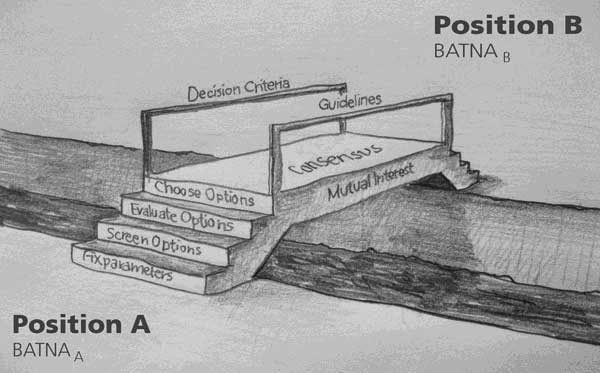
- The wise negotiator frequently chooses not to negotiate.
- "It's my bottom line" is the biggest lie in negotiations.
- Only when the other side doesn't move any more can you be sure they're truly at their bottom line.
- Never say you're at your bottom line unless you are.
- Nobody likes having their first offer accepted.
- Schmoozing is the last refuge of the weak negotiator.
- It's better to bring things up now, when you've got some leverage, than later when you don't.
- Never shave a concession. Either make the whole concession that you've supposed to make, or don't make any concession at all.
- The krunch is the simplest and most frequently used tool in negotiating.
- A krunch is the only way to respond to an unreasonable offer.
- Every concession has a price, but krunches cost nothing.
- Only the final handshake seals the deal. Until then, all issues remain open.
- Never stick with an issue that's not working. Skip it and move on to something else.
- The nibble is negotiating's equivalent of a layup.
- Always persuade first. Negotiate only when persuasion fails.
- Face is humankind's third rail. Touch it and die.
- Win-win negotiating is mandatory because the other side survives the talks.
- Don't make a concession without seeking something in exchange.
- Try to avoid saying "no" to the other side. "Yes, if..." is better.
- If you ask for more (without reason) you'll get more.
- Your opening offer should be assertive but never ridiculous.
- Nibbling is part of doing a complete job as a negotiator.
- Sometimes people find satisfactions in strange places.
- Creativity is the most fickle and capricious tool in negotiating.
- The value of the concession to the other side is what matters.
- Setting your Envelopes is your most important homework task.
- Separate the people from the problem. Be hard on the problem but soft on the people.
- We make more concessions to friends.
- The quicker the deal, the greater the risk.
- The more authority you have, the more concessions you'll have.
- Always negotiate with the highest authority person you can get access to.
- Bosses give away the ranch.
- It's where you open, not when, that matters.
- Teams are inherently dangerous, and the bigger the team, the greater the risk.
- Being outnumbered means you're in a target-rich environment.


Newton: Up and down
In view of the recent ups and downs of companies, stock-prices, currencies and economies a quote from Newton is interesting: "What goes up must come down". I guess its related to the 2nd and third thermodynamic law? While researching his quotes I came across another one that touches more on social interactions, I assume: “We build too many walls and not enough bridges.”
Roller coasters > Public transportation
A colleague of mine at Google suggested that roller coasters and ski-lifts are better in nearly every dimension (speed, energy efficiency, fun, up-time, variable costs, etc.) than public transportation.
So why are we still using buses?
So why are we still using buses?
Thursday, March 13, 2008

Sunday, March 09, 2008

Saturday, March 08, 2008
"Expensive" Placebos Work Better Than "Cheap" Ones
A new study published in the American Medical Association has a new and astonishing demonstration of just how much your perception becomes your reality when it comes to prices. People in the study thought they were trying out a new kind of pain med. Instead, they got sugar pills. However, some were told their sugar pills cost $2.50, and the others were told the pills cost $0.10. People with the "pricey" sugar pill had their pain reduced much more than the "cheap" sugar pill. Does this mean that price alone pays for itself?
Source: www.consumerist.com
Source: www.consumerist.com
Saturday, February 23, 2008

Friday, February 22, 2008

Subscribe to:
Posts (Atom)